

Gratitude often gets talked about like it is just good manners. You say “thank you,” appreciate what you have, and move on. But real gratitude goes much deeper than that.
It is one of the simplest and most powerful habits you can build for your mental, emotional, and even physical well-being. When practiced consistently, gratitude can shift the way you think, help you focus on what is going well, and create a healthier, more positive outlook on life.
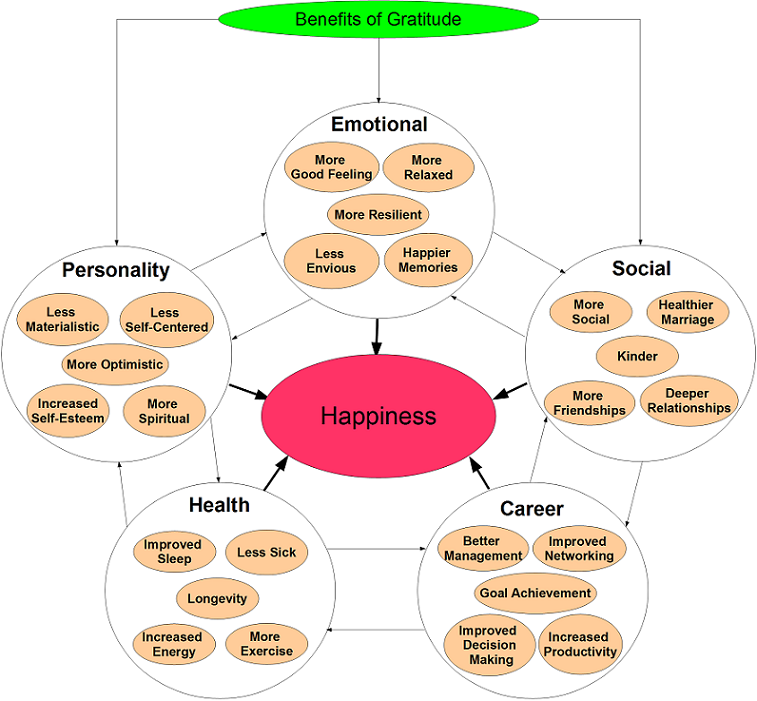
Research has shown that gratitude is linked to lower stress, better sleep, improved relationships, greater happiness, and stronger overall mental health. It is not about ignoring life’s challenges or pretending everything is perfect. It is about training your mind to notice the good, even during difficult seasons.
The best part is that gratitude does not require huge lifestyle changes. Small daily practices, like writing down what you are thankful for, can create meaningful shifts over time.
In this article, we are diving into the science-backed benefits of gratitude and why making it part of your daily routine can have such a powerful impact. And if you are ready to put it into practice, there is a free download waiting for you at the end of this article to help you get started.
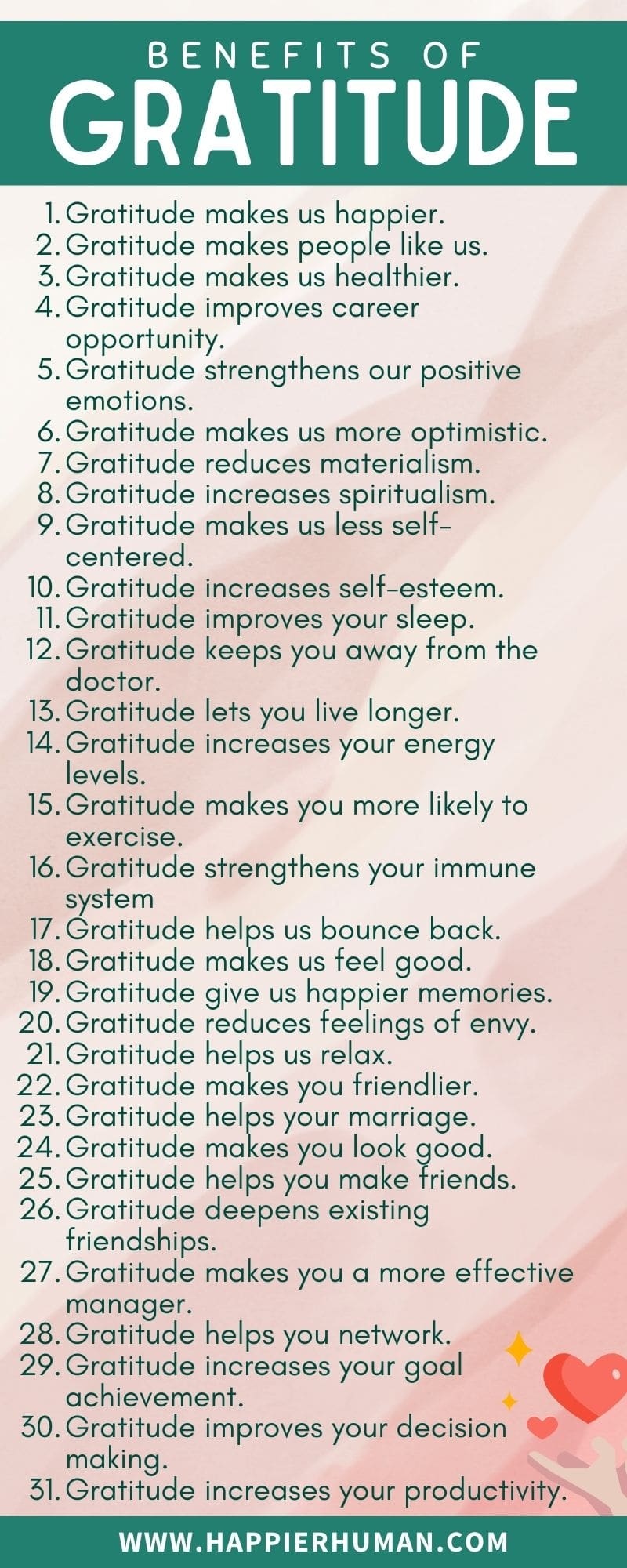
1. Gratitude makes us happier.
It's a little-known fact that happiness is one of the few things in life that can be grown with the right attitude.
One approach to cultivating happiness is to continue expressing gratitude in everyday life by writing gratitude letters (that never need to be sent) to people you feel grateful for.
Writing about people, experiences, or moments that evoke thankfulness helps to create an overall feeling of joy and contentment; the power of expressing gratitude should not be underestimated!
From quick “thank-you notes” to special events, showering loved ones with appreciation gifts, or writing full-on gratitude letters, taking the time to recognize how fortunate we are in life can transform how we experience happiness each day—it just takes a bit of conscious effort.
So why delay? Break out that notebook and start gratitude journaling today– your happiness will thank you for it!
Daily gratitude does not take long.
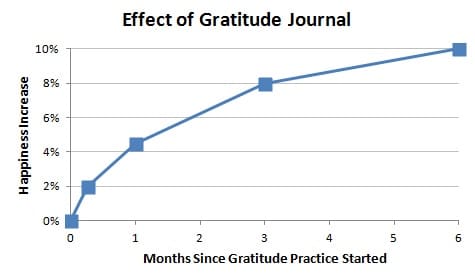
Creating a daily gratitude habit does not take a lot of time. Allocating 5 minutes a day can have a large impact.
A five-minute daily gratitude journal can increase your long-term well-being by over 10 percent. That's the same impact as doubling your income!
(If you're looking for another way to feel happier, I recommend exercising, explicitly building a running habit.)
Learn more about expressing gratitude with journaling:
2. Gratitude makes people like us.
We’ve all heard it before: attitude is everything. While that phrase might suggest an optimistic outlook, research has found that this optimistic view is quite accurate. In two studies with 243 participants, those who were 10% more grateful than average had 17.5% more social capital.
So, having an attitude of gratitude makes people like us more!
Further studies have shown that expressing gratitude provides us with better personal experiences and helps us build social capital with those around us.
Being open and vocal about our appreciation stimulates prosocial behavior from those around us, further strengthening individual bonds. So don’t be afraid to appreciate the small things – in doing so, you may improve your relationships significantly!
3. Gratitude makes us healthier.
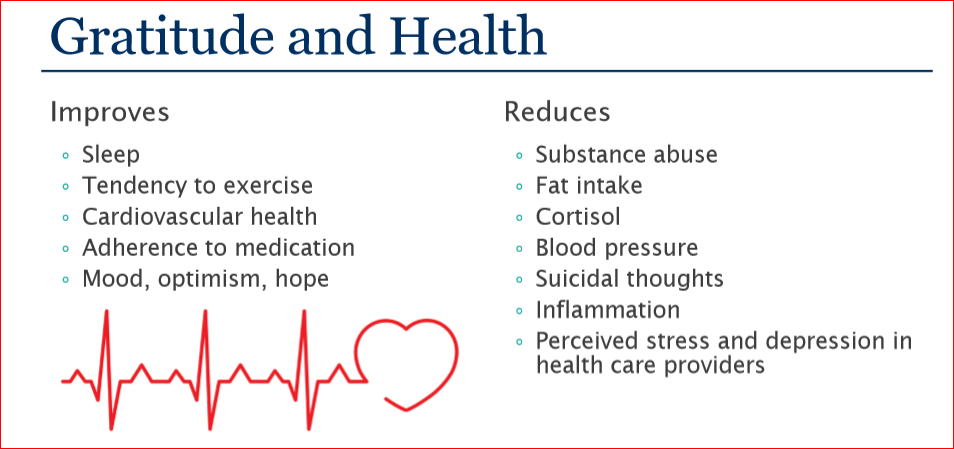
We all know that physical health is important, but the feelings we cultivate within ourselves are equally relevant to our well-being. Recognizing the benefits of practicing gratitude can do more than lift our spirits—research shows it helps us reach physical health milestones, too.
Studies have revealed that regular gratitude displays in everyday life can reduce cortisol levels, potentially reducing blood pressure and relieving chronic physical pain.
Who knew being extra thankful could enhance our physical health? There seems to be a lot more to gain from expressing gratitude than we might have imagined!
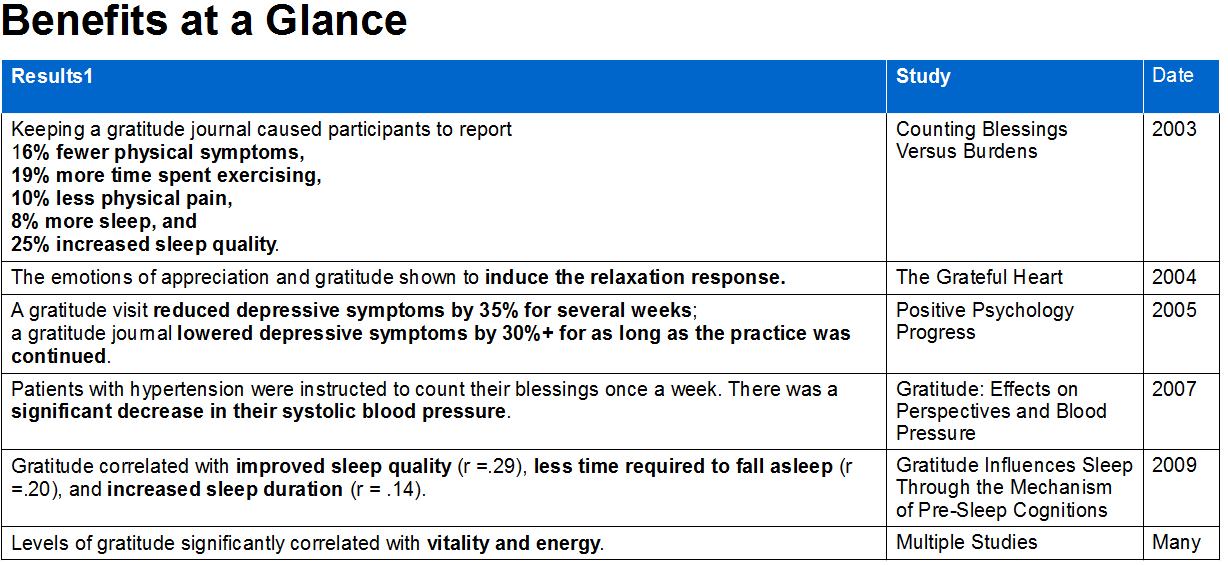
4. Gratitude improves career opportunities.
When it comes to the workplace, gratitude plays an important role—yet it is often neglected daily.
From improving career opportunities to making you a more effective manager and improving your decision-making capabilities, we should give gratitude more attention.
Taking a moment to thank someone in difficult situations or even in everyday conversations with colleagues can help us all feel happier.
Of course, various studies have found that being grateful at work helps usfind mentors and leads us one step closer to achieving our career goals.
5. Gratitude strengthens our positive emotions.
Gratitude is like a good breakfast—it sets you up for the day.
Feeling unappreciated and overwhelmed by everyday difficulties can get us down, but good things are always around us if we take the time to look for them. Gratitude can help bring those good things into focus and boost our spirits!
Regularly reflecting on everything from simple pleasures like sunny days or good conversations to life-altering moments of joy can help us strengthen our positive emotions and reduce our envy.
Taking gratitude breaks throughout the day helps remind us of all the good around us, even when it feels like there's not a lot of good news in the world.
So, if you're feeling stressed, try taking a few moments to count your blessings; it'll make your memories happier and make you feel good again!
How does expressing gratitude improve personality?
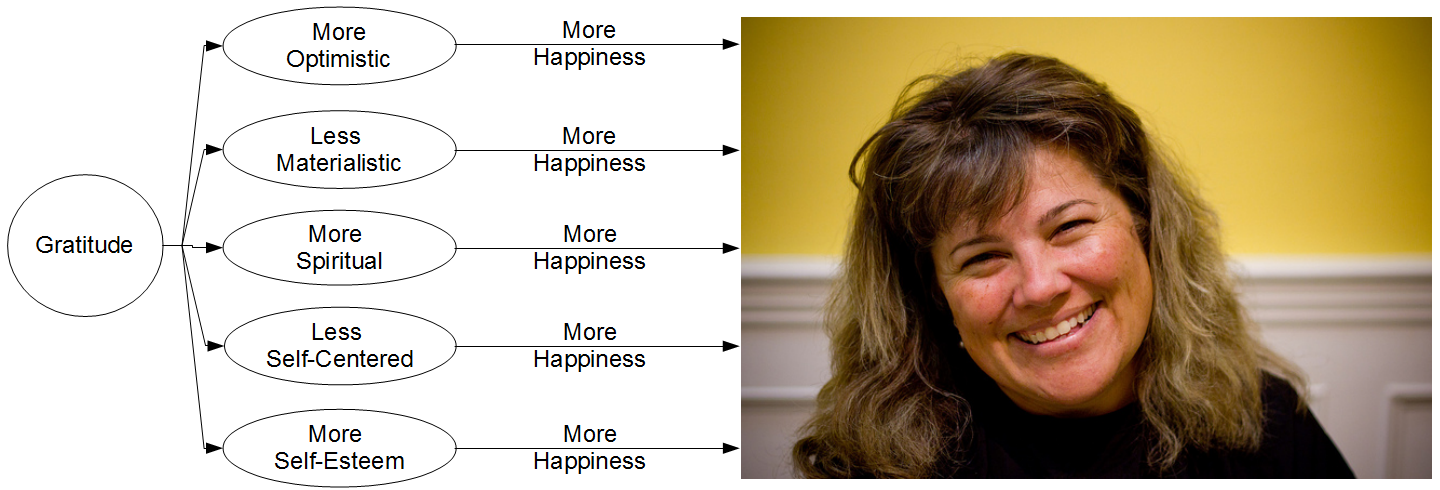
Practicing gratitude has the power to transform our personalities in various ways. Studies by counseling psychologists show that an attitude of gratitude benefits us on multiple levels, including our personality.
Expressing appreciation for life’s blessings results in far more than just inner peace. It benefits us in many facets of life. A little gratitude helps us develop an optimistic outlook, reduces materialism, and increases spirituality.
As we focus on the good and joyous moments from our past, we become less self-centered and better equipped to view the world around us from others’ perspectives; prosocial behavior is known to increase connectedness between people.
Not only does gratitude reduce feelings of emotional distress such as depression and anxiety, but psychologists also remark that it can lead to increased self-esteem, social engagement, and better overall well-being.
While all of these benefits of gratitude are impressive enough on their own, when taken together, they form one fantastic tool for developing a personality that radiates positivity!
Let's dig a bit deeper into the benefits of gratitude for improving personality:
6. Gratitude makes us more optimistic.
It's no surprise that gratitude and optimism go hand in hand, especially since evidence suggests that increasing our level of gratitude directly boosts our optimism.
For people suffering from loneliness, disappointment, or negative emotions, developing a practice of gratitude can help them swap out these feelings for positive ones. This can help them look at life with an optimistic outlook rather than one filled with despair.
The science behind gratitude and optimism
By writing down one thing we're thankful for daily, we can significantly increase our happiness, health, and even lifespan!
A gratitude journal is worth maintaining for this alone! You can also make journaling easier by using gratitude apps to keep track of the good things you are thankful for daily.
7. Gratitude reduces materialism.
The vital role of gratitude in reducing materialism cannot be overstated. Several studies have found that gratitude reduces short-term gratification and reinforces the pursuit of more meaningful goals in life.
On the other hand, little gratitude can cause people to become obsessed with accumulating material possessions – often masking underlying feelings of unhappiness.
Thus, people should strive to recognize the importance of expressing gratitude and take moments to appreciate all they have achieved. Doing so will help them live a more satisfying life and reduce their materialistic needs in the long run.
How EXACTLY does gratitude reduce materialism?
Materialism flows from two sources: role models and insecurity.
- Americans are constantly bombarded with the materialistic ideal that money brings success. This notion is perpetuated by advertisements, celebrity culture, and business standards for achieving our dreams. Gratitude can be a powerful tool to help diminish feelings of comparison or envy toward these materialist “role models.”
- Those with unmet psychological needs, such as a lack of confidence or having had difficult upbringings, can be more likely to become materialistic. Fortunately for them – and everyone else, too! – cultivating gratitude is a great way to break the cycle: perceiving benevolence triggers an emotional response that fosters feelings of security rather than insecurity and consumerism. Being grateful gives us a sense of being enveloped in kindness from our environment, which diminishes any underlying fear we may experience otherwise.
8. Gratitude increases spiritualism.
One benefit of regularly practicing gratitude is that it can lead to improved life satisfaction and even spiritual transcendence.
Studies have found that the spiritually enlightened are more likely to exhibit gratitude; conversely, gratitude can bring a person closer to their religious beliefs.
There are two reasons for this spiritual | gratitude connection:
This might be because those who practice spirituality and have solid religious ties possess many of the same traits associated with an attitude of thankfulness—such as a strong sense of connection with others and an understanding that we all rely on one another in some capacity.
As such, cultivating an appreciation for life's blessings can help us view ourselves and our world through a lens of interconnections. Ultimately, this could lead to greater personal fulfillment and peace.
9. Gratitude makes us less self-centered.
I'll be sincere, I used to be a self-centered twat – until I started to practice gratitude.
Studies have shown that cultivating gratitude can make us less self-centered and more open to others, and my own experience certainly supports this.
When we focus on the benefits of gratitude – for example, Robert Emmons' ‘Three Good Things’ exercise – we direct our attention away from ourselves and towards others, as well as the realization that we aren't the only ones who deserve recognition.
A gratitude practice can be far more beneficial than self-esteem therapy;. In contrast, self-esteem therapy may give us a confidence boost in the short term, in the long term, it can make us more narcissistic or damage our self-esteem.
But with gratitude practice, there are no such risks – the effects are always positive.
10. Gratitude increases self-esteem.
Regarding self-esteem matters, daily mantras just don't always cut it!
Nothing works better than knowing that your peers are interested in helping you out and doing so out of genuine goodness and care for your well-being.
Gratitude is the emotion that encompasses this feeling, and when developed daily, it can lead to a positive outlook on life. As a result, countless acts of kindness are performed daily to help bridge divides between people and increase everyone's self-esteem.
So, let's foster a world where gratitude increases self-esteem!
Gratitude creates a more supportive social dynamic in three ways:
- Expressing gratitude is a powerful tool that can open up unexpected opportunities. Research has proven it not only strengthens relationships and helps spread good vibes but also increases one's social capital – making them more likely to be helped by others simply because they're liked and appreciated.
- Gratitude increases one's recognition of benevolence. For example, a person with low self-esteem may view an act of kindness with a skeptical eye, thinking that the benefactor is trying to get something from them. A grateful person would take the kindness at face value, believing themselves to be worthy of receiving no-strings-attached kindness.
- Practicing gratitude makes you feel better about yourself. Chances are good that you do not do good things simply because it makes you feel good about yourself, but it is a nice side effect. Coupling gratitude with things like positive mantras will help increase your confidence even more.
How does gratitude affect health?
Research shows that cultivating gratitude can have many excellent health benefits; not only can you expect to feel more relaxed and calmer, but you might also find yourself living a healthier life.
For starters, grateful people tend to get better quality sleep, which is incredibly important for health maintenance. Gratitude has also been associated with increased overall health and vitality. Studies suggest that people who experience and express gratitude may live longer lives!
In this section, we will explore the health benefits of gratitude, including sleep, general health, longer life, increased energy, and improved exercise.
So, let's take a deeper look at how expressing gratitude has a positive impact on overall well-being:
11. Gratitude improves your sleep.
If you want a good night's sleep, consider pursuing gratitude as a health practice designed to improve your sleep.
Research has shown significant health benefits of gratitude practice: improved sleep quality, increased sleep duration, and even relief from chronic pain. So if counting sheep isn't doing the trick and you find yourself tossing and turning at night, give gratitude a try.
One study of 65 subjects with a chronic pain condition showed those assigned a daily gratitude journal to complete before bed got half an hour more shut-eye than those who didn't! Who knew the key to better health could be as simple as counting blessings?
In another study of 400 healthy people, participants who scored higher on a gratitude test also had significantly better sleep.
The reason grateful people sleep better is not that their lives are better—levels of gratitude are more dependent on personality and life perspective than on life situations.
12. Gratitude keeps you away from the doctor.
Gratitude can't cure cancer (neither can positive thinking), but it can strengthen your physiological functioning.
Positive emotions improve health. The details are complicated, but the overall picture is not—if you want to improve your health, improve your mind. This fact comes from 137 research studies.
Gratitude is a positive emotion.
Practicing gratitude has been much-touted to improve our health, and science appears to have the figures to back it up.
Recent studies have revealed that those thankful for all they have can enjoy reduced pain, lower blood pressure, fewer doctor visits, and even fewer mental health woes than the ingrates among us (just kidding!).
Studies about health show grateful people have:
Why Gratitude Impacts Health:
13. Gratitude lets you live longer.
I know what you're thinking: longer life, better care, and all the other good stuff that comes with having gratitude. It sounds too good to be true.
The connection between longer life and gratitude has yet to be proven in a study deep enough (and over a long enough time frame) to make a statement with 100% certainty.
But here's what we do know for sure: a recent study has linked optimistic people with longer lives, which calls for high expectations regarding the link between gratitude and longer lifespans.
With evidence of improved well-being, better physical health, and a strengthened immune system, it's safe to say that practicing gratitude in your day-to-day life may lead to a longer, healthier life.
We also know that expressing gratitude strongly correlates with positive emotions like optimism.
So, gratitude –> optimism –> an extra few months or years on earth.
With positive psychology research, such as Robert Emmons's work, on the rise, I believe we can expect this claim to be rigorously tested within the next five to ten years with some longer life-length studies.
14. Gratitude increases your energy levels.
What's the secret to increased energy and vitality? According to experts, gratitude may be the answer.
It seems like increased gratitude correlates with increased physical and mental vigor, so perhaps having a thankful spirit can boost your energy levels. Whether you give thanks every day or simply count your blessings, expressing gratitude might just be the key to achieving greater positive energy. Who knew?
But do people with more energy tend to experience more gratitude? Does gratitude lead to increased energy, or is something else going on?
Admittedly, this is a bit of the chicken and egg scenario.
Do people with more energy tend to experience more gratitude? Does gratitude lead to increased energy? Or is something else going on? Could it simply be that people with more energy also tend to be the same people who invest time in practicing gratitude?
Let's look at the research on gratitude and increased energy:
- A study of 238 people found a correlation of .46 between vitality and gratitude.
- A study of 1662 people found a correlation of .38 between vitality and gratitude.
- The same study found correlations above .3 even after controlling for the levels of extroversion, agreeableness, neuroticism, and perceived social desirability. This means that vitality and gratitude are strongly correlated even after considering the possibility that they are correlated because many high-energy and high-gratitude people share personality traits like extroversion.
I believe that it's two of those three:
- People with high levels of vitality tend to have some of the same traits as highly grateful people, like high levels of optimism and life satisfaction.
- Gratitude increases physical and mental well-being, which in turn increases energy levels.
Want some more energy? Check out this great article on 20 ways to increase your energy levels.
15. Gratitude makes you more likely to exercise.
Looking for a way to stick to daily exercise? One of the simplest methods you can use is to apply some psychological principles backed by research.
For instance, regularly practicing gratitude has been found to boost our daily motivation to get physical and make us more likely to exercise. One 11-week study involving 96 Americans discovered that those who kept a weekly gratitude journal exercised 40 minutes more than those in the control group.
Next time you feel your daily life getting too mundane, try expressing your daily thankfulness; it will lift your spirits and lead to better physical health!
[Sidebar: As a reminder, if you'd like to build the gratitude journal habit, then this journal can help.]
16. Gratitude strengthens your immune system
There is not one medicine you can buy at the store with as many benefits as gratitude.
Practicing gratitude regularly may be enough to keep you healthy and safe from illness. When we focus on being thankful for what we have, our immune system is strengthened, which helps us fight off any foreign invaders that try to attack our bodies.
Many studies have proven this true (Sood, 2009; Emmons, 2010). So next time you feel yourself starting to get sick before you reach for the pills and potions, why not try some positive thinking first? It could make all the difference.
How does gratitude affect emotions?
Gratitude is more than lip service – it's a powerful tool to create more positive emotions.
Studies in social psychology have demonstrated the emotional benefits of participating in a regular gratitude practice, whether writing gratitude letters or simply taking a pause throughout the day to appreciate what we have.
There's no denying that when we take the time to express gratitude, our emotions become more balanced, and life becomes more manageable.
In the following paragraphs, we will examine the interconnections between gratitude and our emotions and how gratitude can lead to improved psychological health.
We shall look at how gratitude increases resilience and good feelings, positively colors memories, reduces envy, and helps us relax.
Let's dig deeper into how regularly practicing gratitude impacts these emotions…
17. Gratitude helps us bounce back.
We all get “down” at times. Depression. Anxiety. Loneliness. It happens to us all.
Gratitude does not magically “immune” you to these negative emotions. They are a part of life's experience. However, people who express gratitude are more resilient.
Expressing gratitude is not simply an attitude adjustment; it has lasting effects on your mental health and ability to cope with difficult times.
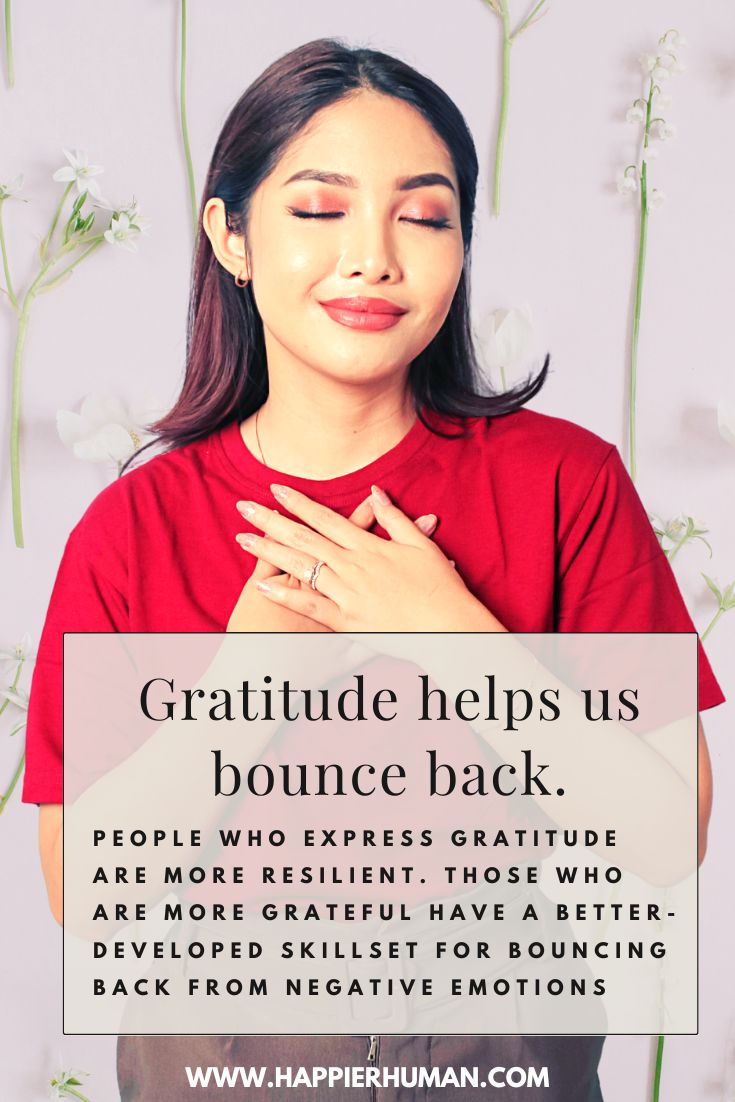
Those who are more grateful have a better-developed skillset for bouncing back from negative emotions such as depression, anxiety, or loneliness much quicker than those without the same level of appreciation.
Expressing gratitude helps us build resilience by making us less likely to develop PTSD symptoms when confronted with stressful situations while also assisting people to seek out essential social support during trying moments in life.
18. Gratitude makes us feel good.
Surprise, surprise: gratitude feels good!
Yet only 20% of Americans rate gratitude as a positive and constructive emotion, compared to the much more impressive 50% of Europeans.
According to Robert Emmons, gratitude researcher extraordinaire, it is essentially our way of recognizing that our happiness was caused by another's kindness. In short, gratitude is happiness in and of itself – no miracle required.
Still, think expressing and feeling grateful makes you weak? F&ck, no, it doesn't.
Gratitude may be underestimated, but the benefits it can offer are tremendous. From being healthier and happier to even having greater success, there's hardly anything better this emotion can bring us!
19. Gratitude gives us happier memories.
Our memories are not set in stone, like data stored on a hard drive.
There are innumerable ways our memories can be fallible, from falsely recollecting experiences as being worse than they were, shorter or longer, people as being more benevolent or harsher than they were, and so on.
Experiencing moments of gratitude—even in passing—can rewire our memories to focus on the positive aspects of a situation.
Research has found that when we are grateful, we are more apt to transform neutral and even negative memories into something uplifting. For example, in one study, participants with unfinished memories were more likely to remember the promising elements of those experiences rather than just the gloomy ones.
So, next time your past comes back to haunt you, take some solace in knowing that, thanks to gratitude, you can look at it with a sunnier disposition!
Why does this memory work like this? The reason why is called cognitive bias.
Check out this blog post to find out more about cognitive bias.
Alternatively, if you want a really deep dive into how memory and cognitive bias work, there are two great books on the subject: Thinking, Fast and Slow (written by the founder of behavioral economics, Daniel Kahneman) and Mistakes Were Made (But Not by Me).
20. Gratitude reduces feelings of envy.
It's not hard to feel some envy when comparing our successes to those of others. But wallowing in it can do little more than stunt our resolve and put us on a one-way path to misanthropy.
Fortunately, the antidote exists in the form of gratitude. When we take stock of what we have, whether material or not, it reminds us of everything we have achieved and spurs us on rather than discouraging us.
Gratitude can also help quell jealousy by shifting our perspective away from what others might have and onto what we already enjoy. In short, a pinch of envy is great for motivation, but an overdose isn't; it is better to combat your feelings with some appreciation and admiration!
21. Gratitude helps us relax.
Gratitude and positive emotion, in general, are among the most potent relaxants known to man.
I had trouble sleeping a few nights ago because I was too stressed and couldn't relax. I'll be honest: For the few minutes that I was able to hold feelings of gratitude, I almost fell asleep, but holding feelings of gratitude is hard!
In this case, I got out of bed too hard.
Gratitude may be just as or even more effective than relaxation methods such as deep breathing, but because it is also more complex, is unfeasible as an actual relaxation technique.
Think of it like tea—one or two cups help you relax, but three of four make you want to empty your bladder. But it could just be me. Perhaps you'll find practices of gratitude more natural and easy.
22. Gratitude makes you friendlier.
Being thankful for the things we have isn't just a great way to feel more positive—it can also make us more pleasant to be around!
Research has demonstrated that an attitude of gratitude makes people more likely to lend a helping hand, both when dealing with problems and providing moral support.
So, if you want to have more fun at parties, start writing your thank you notes!
Why is this true?
There are two main reasons gratitude makes people friendlier:
- Gratitude helps us perceive kindness, which we have a natural tendency to want to reciprocate. Without gratitude, we may not recognize when someone is helping us (the same way anger lets us know when someone is trying to harm us).
- Gratitude makes us happier and more energetic, which are highly linked to pro-social behavior.
23. Gratitude helps your marriage.
It is no secret that marriages require regular maintenance, but many people don't realize that gratitude and appreciation are important ingredients in marital success.
Scientists have studied the impact of positive interactions in relationships and coined the Losada ratio.
This theory suggests that relationships suffer if more negative than positive expressions are exchanged during a typical interaction. Marriages that are least likely to plummet toward divorce or languishment have a positivity ratio of at least 5.1.
Thus, couples should be actively mindful of their words and actions and strive daily to increase the Losada ratio for a healthy, thriving marriage by showing gratitude and positivity to their spouse.
24. Gratitude makes you look good.
Showing gratitude can make you look good in more ways than one.
Whether it’s verbalized or acted out, being thankful is a surefire way to radiate positive vibes and garner respect from those around you. After all, nobody likes a grumpy, unappreciative sourpuss – so if you want to appear attractive and likable, show your appreciation! It may not be the ~hottest~ trait, but it has its golden merits.
25. Gratitude helps you make friends.
Gratitude is like a magnet for meaningful relationships.
Studies show that when we invest some extra effort into expressing our appreciation, those with similar values will naturally come our way!
Genuine gratitude attracts people with an appreciative mindset – one of the most significant benefits you can get out of this habit. After all, who doesn't enjoy feeling appreciated? Not to mention, it feels pretty good to make new pals too!
26. Gratitude deepens existing friendships.
A little appreciation goes a long way toward improving relationships with friends, just like expressing gratitude can strengthen romantic relationships.
Imagine how great it would feel if you expressed gratitude to your friends for all the laughs and support they’ve given you over the years – it could open up conversations like never before!
As science suggests (Lambert & Fincham, 2011, pp. 50-60), expressions of thankfulness make space for more comfortable communication, laying the foundation blocks for resolving possible issues.
So if you want to extend your friendship the extra mile (wherever those miles may take you), don’t forget to tell your pals what they mean to you occasionally – they deserve nothing less!
27. Gratitude makes you a more effective manager.
As any effective manager knows, getting the most out of a team takes a certain finesse. A sharp tongue and critical eye can help keep everyone in line, but don't underestimate the power of professing gratitude and giving praise.
Recent studies have found that expressions of gratitude are more likely to influence behavior than criticism. In an unexpected twist, managers who repeat their praise don't run the risk of it becoming too rote; positive reinforcement done properly will continue to drive performance higher.
So if you want your team to start producing double-worthy efforts, show them some appreciation!
28. Gratitude helps you network.
Gratitude is the magical ingredient that helps you build your network. Numerous studies point to increased social behaviors due to gratitude, and two longitudinal experiments revealed that those with higher levels of it were more likely to develop robust social capital.
But what does that mean for networking?
It means that gratitude can help you turn acquaintances into mentors, proteges, and benefactors – no small feat!
Being grateful makes others more likely to help you, making mentorships easier to find and maintain. We know how advantageous having mentors can be for professional success – which only further emphasizes why gratitude should be front and center when engaging with others.
29. Gratitude increases your goal achievement.
It looks like you better thank your lucky stars because gratitude is said to help you reach those lofty goals you've been eyeing.
In a study, some participants were encouraged to keep a daily gratitude journal while striving toward their goals. At the end of it all, they reported making more progress than the unlucky control group!
So take it from us – if your goal achievement is flagging, don't pop open those beers just yet – open that notepad instead, and write down a few things you're grateful for. Who knows where it might lead?
30. Gratitude improves your decision-making.
If you're an indecisive person, you already know that decision-making can be daunting. Not only do indecisive types overthink every decision, but they often grapple with the fact that their choices don't have clear-cut solutions.
However, science has shown us one weapon to help lessen indecisive minds: gratitude. Research suggests that taking a moment to thank yourself before making a choice profoundly improves decision-making since it allows your brain to take in more information rather than obsess over minor details.
So the next time you find yourself struggling with indecision, take a breath and remember what you are thankful for – it might just lead you to the right choice!
31. Gratitude increases your productivity.
It stands to reason that being confident leads to increased productivity—after all, with worries out of the way, you're free to focus more on the task at hand. But what if we could use something like gratitude to make us more productive?
Psychologists have found answers: They show us how gratitude increases self-esteem and reduces insecurity, effectively allowing us to direct better focus on our work! So next time you want to power up your productivity levels, be thankful—it's science!
Free Download: Gratitude Printables
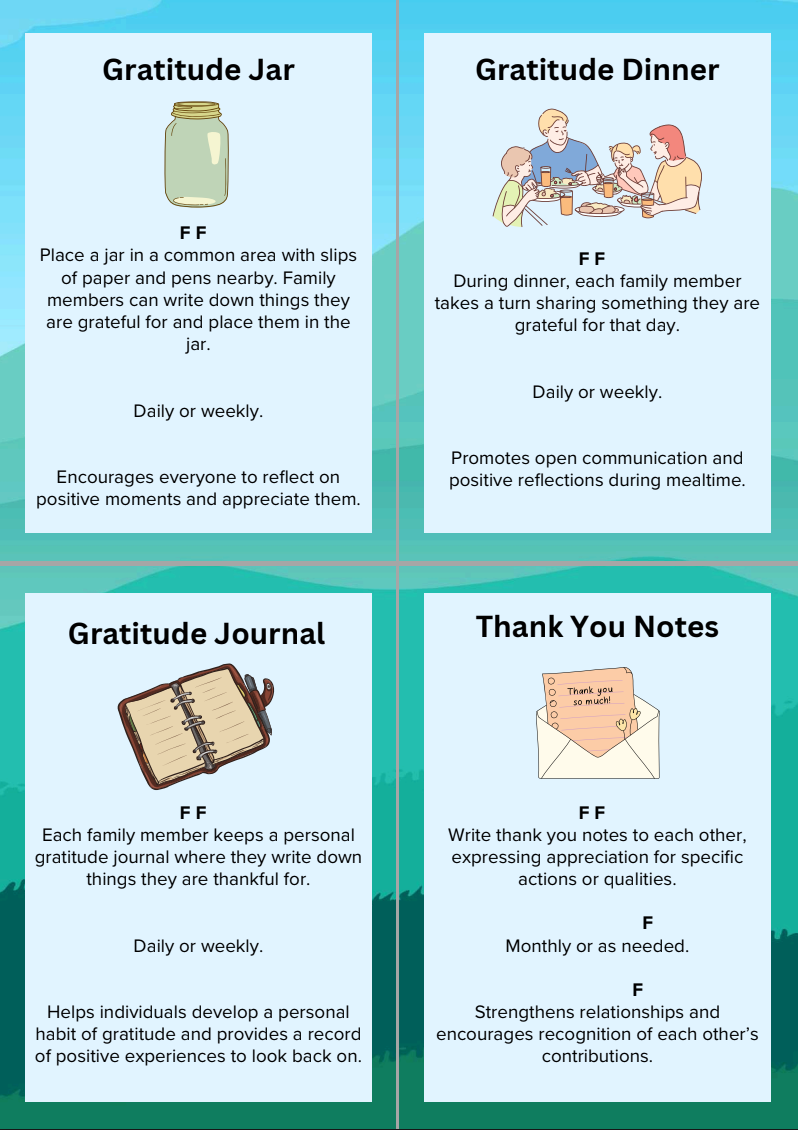
Our Gratitude Printables are designed to make building a gratitude habit simple and enjoyable. Whether you want guided journal prompts, reflection pages, or an easy way to create a consistent daily practice, these printables give you practical tools to help you focus on the positive and experience the benefits of gratitude firsthand.
Download your free copy and start building a gratitude practice today.
(The link opens up a Google Drive folder where you can get the PDF download in a variety of sizes: A4, A5, and/or US Letter.)
A Final Word on the Benefits of Gratitude
Now that we have seen the significant advantages of practicing gratitude, it is time to implement what we’ve learned into our daily lives.
Whether you choose to take a few moments to reflect on something you are grateful for before heading out the door every morning or end your day by jotting down five things you are thankful for in a journal, incorporating gratitude into your life can help you become a happier, healthier, and more successful version of yourself.
Furthermore, allowing yourself the opportunity to be grateful can foster increased self-esteem that ultimately directs us away from negative thought cycles and towards positivity.
As you can see from these 31 benefits of gratitude, there are many selfish reasons to express gratitude in addition to the common altruistic ideals that may spring to mind. So put your best foot forward – try taking steps towards expressing gratitude today!
Awesome topic – I agree with you on so many points. Gratitude is an amazing emotion that can lead to a lot “more” in your life. happiness as you point out, I also believe that is helps reduce stress. When you are spending your time in gratitude for what you have, rather than worrying about what you should you, your life is much less stressful.
I never thought of it that way. I too agree that gratitude reduces stress, but I hadn’t thought of this particular reason why. Thank you for pointing that out.
Amit,
You outdid yourself this time. The presentation value of this article is AMAZING! Please write an article for ProBlogger soon about how to make your blog posts look unlike anything else out there and be super interactive. Oh, and please teach me how to make those indented tables like in number 6.
The content was great too (kind of important of course). I’ll admit, I skimmed a little bit but you made it great for me to dive as deep as I wanted in different sections.
Yes! I’m glad the experiment worked. Thank you!
As I’m sure you’ve noticed, my posts are too long 🙂 I’m starting to experiment with different ways I can stay true to my personality, while still keeping my articles readable. I’m not sure what’s going to come next, but I know I still have work to do.
I’d be glad to teach you. I’m too lazy to write an article for ProBlogger, but I’m happy to put together a tutorial for you (and other A-list folks).
Ah, I realize my priorities are completely messed up, of course. I shouldn’t be too lazy to write an article for a website that can drive tons of traffic to my site. Whatever 🙂
Thanks Bobbi! How can I pack so much information into one blog? Mm… think of it as a reflection of my personality, it comes out naturally 🙂
The research for this post took an extremely long time (~25-30 hours), but because I’m such a nerd, that was fun and just replaced my usual reading time.
The html, css, javascript, and creating the images took 5-6 hours, but once again is fun, so no problem.
Writing the eBook companion took about 5-7 hours, and writing the actual post took ~6-10 hours, and was the most difficult part. Split up over 3 weeks, 40-50 hours total, or about 2-4 hours each day.
Yeah… not the most efficient use of my time. Whatever 🙂
Hahaa…wow.
Amit, I don’t spend that much time blogging, but I definitely do with music, hilarious to see you document it all here.
I feel like you deserve a reply just for that super thorough reply!
Thanks Priska!
Gratitude is an emotion to be grateful that we humans have the blessing/luck to possess. I’m glad I was able to at least partially convey that.
Amit, you keep me laughing, and I’m grateful for that. This article is so uplifting! I immediately grabbed an old gratitude journal off my shelf and dusted it off, then wrote that I’m grateful for your article today; it has touched my life. Very inspiring, not just the message, but also the presentation and organization. I was pleased to be able to recommend this on Google Plus!
You asked what benefit excites me. I will have to choose goals and productivity. Those are on top of my mind most of the time these days. It is good to know there’s something simple I can do for only five minutes each day, that will help me in those areas.
Thank you for sharing on G+ Linda 🙂
I’m glad you’ve dusted off an old gratitude journal. Hopefully this time the habit will stick.
Did you leave the habit behind in the past because you weren’t seeing immediate benefits? I ask because I’m in the process of putting together some motivational information on how to make the habit stick. I think it’s a shame that such an easy happiness booster isn’t more widely applied.
Amit, the main reason I quit writing my gratitudes is that I’m easily distracted and very forgetful. I tend to make and break habits constantly. If you find ways to overcome this problem I’ll be very happy to read about them. Thanks again for your great article! I am grateful for it…
Wow, what an in-depth post! (Though I can’t say I’m surprised 😉 ) I’d say you covered it all when it comes to gratitude… I never knew there were so many benefits to it! I know I felt happier when I kept a gratitude journal, yet somehow mine is still sitting in the trunk of my car. This post just might get me to walk outside and grab it.
Awesome! And thank you – it’s good to know my excessive thoroughness motivated!
Great topic and even greater post!!!
So in depth and such enthusiastic style of writing.
I also believe in gratitude. Writing a list of things I am thankful for helps me visualize how much I have and how happy I really am 🙂
Thanks Ani!
Gratitude is great, isn’t it 😉
You had convinced me with the first paragraph! but I now have every possible angle to reflect on when I try to sabotage myself by not feeling grateful. No more excuses thanks to you. I have just thought of another entry for my gratitude journal; I am grateful for happierhuman.com 🙂
Thanks Ciara!
I didn’t intend it as such – but I actually use this list now when I need some motivation to be more grateful. Turns out I’m not the only one 🙂
Hi Amit,
Came across your blog for the first time and I must say I am impressed!
Following you now on twitter 🙂
It took me about 20 mins to read through the entire post. I mean really read not skim through.
The effort that you have put in is evident in the post.
Have you considered writing a book?
regards
Shamelle
Hi Shamelle,
Thank you for taking the time to let me know you actually read all gazillion words.
“Have you considered writing a book?” This question made my day, thank you!
Actually I am – in the past month I’ve written one eBook, but on a scale of 1 to 10, I would give it a quality score of 2, and so give it away for free 🙂
I’ll be releasing a draft of my first paid book in January, and would be happy to send you a copy.
Hi Amit,
The passion shows in your writing. I feel it when I read your post 🙂
All the best for the book. If there’s anything I can do to help let me know. I’ll be happy to lend a hand for free.
Sure would like to share your book with my audience. Perhaps, we can schedule a short interview too once the book is done?
regards
Shamelle
Hi Shamelle,
Thank you – it constantly surprises me how friendly some people are on the web 🙂
That would be fantastic! I’d be happy to do an interview and share the book with your audience.
Amit,
A very good and incisive piece. Do one thing for me please. I think God will appreciate it if you appreciate Him by accepting Jesus Christ as your Lord and Savior. I am not asking you to be religious but to enter a personal relationship with the Almighty God, The creator of all things. Your life of GRATITUDE will be complete if you do.
I appreciate you and this blog.
Thanks.
Emma
Hi Emma,
Thank you for your kind words!
I’m sincere when I say this – I wish I could be spiritual and believe in god, because those that are spiritual are generally much happier and more fulfilled than those like me. However, because of my upbringing, personality, and life experience, I do not think there is any chance of that happening. I appreciate your words though.
Try this,…. When I get up in the am to work out ,it’s usually at 5am, not too easy anymore specially when’s its cold and dreary outside but I’ll start out by kissing my beautiful wife mother of my children and say THANK YOU! it would not be any easier if she wasn’t by my side ,then I proceed to my son’s room who’s 12 and is starting to get it, kiss my hand and put it on his face ,smile and say THANK YOU! …..TRY THIS IT WORKS EVERY TIME. 🙂
I love this blog, it really makes you think about what’s important in life! Being kind to not only others but also being kind to yourself can change your life. In recent years I’ve tried to live this way. Helping others as much as possible and helping myself through patience and love. I’ve really been getting involved in charity’s and helping others in need and its made me a better person, I realize how lucky I am too. The cause I’m helping now is helping a family fund raise to rebuild their home after a fire destroyed it and everything they own. The only thing they have left is the clothes on their backs! Here is a link to the fundraiser, http://igg.me/p/221740?a=1179881 I hope others will feel compelled to help also!
Thanks Mike, that’s fantastic!
I personally only donate to givewell.com charities (those which have been determined to provide the most bang for the buck), but I hope your fundraiser goes well, and is able to unstuck itself.
Hi Dr. M G Hiremath,
Thanks for sharing! Would you be able to e-mail me a copy of your paper (amit @ happierhuman . com)? I’d love to give it a read.
Thanks!
Amit
Hi Amit
Paper is on “ESSENCE OF GRATITUDE QUOTIENT IN INDIVIDUAL” It is available for view on “you tube”
Thanks for sharing! . I will post my views & Ppts.Thanks!
Dr. M G Hiremath,
To answer your question, I’m grateful I don’t have a boss like that SNL video…anymore…;)
Love all of these points and just like so many emotions have an opposite, gratitude leads to happiness, as you so well point out and that leads to less stress, less neurotransmitters firing the fight or flight signal which causes more stress to the entire body (and in the extreme, leads to PTSD with all of its manifestations).
I love most of all the time you spent on the hyperlink grid which leads to various points with synonyms in your post. Made me laugh. I am clipping and sharing.
Amit, this is an awesome list of the benefits of gratitude. I found my way here from the AList club and read through this particular post because I had written an article on how to keep a gratitude journal and wanted to read your ideas on the topic. Wow! You have really done some good research. Gratitude has some far-reaching effects.
Thank you Patti!
Yes, because gratitude is so effective in increasing happiness, and because happiness in turn is so effective in improving our lives, gratitude has some far-reaching effects. I’ve been regularly incorporating gratitude into my life for a few months now – there has been a definite change.
Much like your experience, some of the most radiant moments of my day are when I do gratitude meditation.
Hi there,
I’m a writer and an editor and totally subscribe to what you are saying! I thought you might like to know, especially after doing all the research, that there isn’t really a word “mentee.” The word you’re looking for is protege. Hope you can use this information to your benefit because the misuse of a non-word might make you look a little unbelievable. I think you’ve worked way too hard to give that impression.
All the best!
Roberta Hartley
Thank you for the comment Roberta, I’ve updated the article!
I had no idea mentee wasn’t considered a real word. I need to stop trusting online dictionaries.
Why do you stop yourself from being spiritual? If you have the overwhelming feeling of a good, loving God, why not accept it? Your philosophy of being happy and grateful all go back to God.
Thanks for dropping by and leaving a comment Michele!
It’s a difference of opinion – I believe happiness and gratitude are secular; that they arise from good use of our biology, not a higher power.
Similar to this, I believe that secular moralism and spiritual adherence coincide quiet well. If one follows the teachings of God, they are likely to be compassionate, devout, honest, etc… I believe if one wishes to make the best use of their biology (secular moralism), I believe they too will make the choice to be compassionate, devout, honest, etc…
Although perhaps your belief then is that God made our biology in such a way that gratitude, compassion, etc… are the most rewarded emotions (e.g. in comparison to jealousy and hatred, which lead to unhappiness)?
I just didn’t understand how you could ignore that innate feeling of which you spoke in your article. I enjoy reading the information on your page. I kind of get what you are saying, but I believe we as humans begin to think we have more power than we really do. I too feel connected spiritually and allow that feeling to progress. I feel people are afraid of the idea of an all powerful God. I do believe God made us to be naturally compassionate and good people. When people are “bad” I truly believe they are going against their true nature and giving in to the opposite spirit in Satan. Although secular moralism is helpful to others I am not sure how that would work because from a young age, I have believed in God.
i so appreciate the way you talk about, make real and reflect on the feeling, concept, practice and impact of gratitude. thank you, Amit, for your thoughtfulness and inspiration in creating and sharing this with us all. Kim
Hello, Amit…. just came across this when I googled ‘the benefits of gratitutde’ …. thanks for a month’s worth of benefits!! happy New Year!
Thanks Barb! Happy New Year’s to you too!
I hope this months worth of benefits was enough to convince you 🙂
This is an amazing article, thank you for taking the time to compile all these resources and put it all together!
This is an amazing article! I’m a freshman and my sister is a junior and we are doing a project on happiness and wellbeing and this helped tremendously,
thank you and we look forward to reading more!
Glad to help Kaya!
Feel free to e-mail me with any questions – I’ll do what I can to provide answers, or at least point you in the right direction.
Wow Amit, impressive post chocked full of useful info! I am very grateful for your post, grateful for the internet, this computer to type on, my fingers to type with, my eyes to read this and my brain for being able to process this. I usually spend my time in the shower in the morning rattling off everything I’m thankful for to get my day started.
That’s a great habit Jessie, thanks for sharing!
Please read “365 Thank yous”. Read it twice. I have sent or hand delivered over 150 thank you cards since the beginning of february. I feel totally calm. I have some serious challenges with work, but I can handle it.
Peace, it’s is really a good place to be.
Thanks for the recommendation John, I just ordered the book!
And I’m grateful I was able to help you – thank you 🙂
Hello! I would wish to provide a enormous thumbs up for the great info you could have here about this post. We are coming back to your blog for further soon.
This is a fabulous article. Thank you for the level of detail that you have included along with the graphics. I work as a dating coach and I am constantly talking to my clients about the practice of gratitude. Now you’ve provided me with some of the “hacks” I can share with them to keep them motivated to stick with their gratitude practice.
Thank you for your work,
Mary
One of my primary motivations for practicing gratitude is so that I can be a better partner. It’s great that you share that with your clients!
What other major hacks do you commonly recommend as a dating coach?
Thanks for sharing your story Marshall!
From the customer perspective, I’m much more likely to be a repeat customer or provide leads to someone who is grateful. It just makes the entire interaction more pleasent.
This is an awesome article! It made me happier just reading it! 🙂 Great insight!
We are a gaggle of volunteers and opening a new scheme in our community.
Your web site provided us with valuable info to work on. You have done an impressive process and our entire neighborhood can be grateful to you.
Hi Amit,
THank you for the effort you have put in to compile the research findings systematically and in simple english. Could you help me locate the references which you have marked like a1 a2 a3 a4
Regards
Madhur
Sure Madhur!
Hit Ctrl + F, type in references, then click on the link which appears (it’s at the very bottom of the article). A list of references will appear below (you’ll need to have javascript active).
A fine piece that I will share. I just emailed the author this response: I like this overview of gratitude and its benefits. One point I’d emphasize is that you research the great spiritual traditions. I think you have misunderstood something important. You write that “Gratitude increases spiritualism.” Actually, spiritualism means that you believe that the spirits of dead people are communicating with us. This notion isn’t a central part of any of the great world religions. It’s not there in Buddhism, for example. Also, on the Buddhist path, one can be overflowing with gratitude without having a notion of God. And then, if you consider the Christian path, one can have a heart overflowing with gratitude, just as you did, without adhering to any particular image of God, because God is not a noun (like “table”). In the Jewish and Christian traditions, God is the great Mystery who births forth this cosmos and cannot be contained by any image, concept, name or theory. In Christianity, this is called the apophatic dimension of spiritual practice. Let go into the gratitude that is continuously flowing throughout all creation and you are in the deep flow of something that is coming through you, but something that you do not own and you did not create. This is a powerful experience, beyond words, ideology and ego. Go with that flow and you’re in line with a vast oceanic blessing that is always happening, whether you participate or not. It’s a relief and a joy to participate.
Wow! Well done survey of the positive effects of practicing gratitude!
Amit,
Thank you for your post! It was fascinating. I do have one question for you, if gratefulness makes you closer to God, why do you keep pushing him away?
Glad you liked it, thanks for leaving a comment 🙂
From your perspective, the word push might seem appropriate, but from mine that word is not quite right. My estimate of the probability that god exists is .01%. The scientific research on gratitude is exactly that – scientific, and therefore does nothing to shift my probability estimate.
Hey Amit,
I really liked the gratitude vs wining the lottery graph you have here so I wanted to make sure that it is supported but the papers you cite. As it turns out, in the Brickman et al., paper, the authors did not measure the happiness of lottery winners in a longitudinal manner (right before and after winning the lottery and 6 months later). So, I am not quite sure where your data for the graph come from. As it stands, the graph you’ve made is misleading because it suggests that the happiness of lottery winners decreases over time after the win, something that is not at all shown in the data by the Brickman et al paper you cite. Please advise if you used another paper to create this graph, whether you just misread the paper, or (and I hope not) purposefully mislead your readers.
Thank you Kostadin!
I’ve taken down the graph and amended my text. I have a clear memory of getting the data from a longitudinal study, but as you said, the paper I cited is no such thing. A quick literature search turned up papers which suggest the opposite of what I originally claimed – that winning the lottery does in fact create small but significant long-term increases in happiness. So even if I find the original paper, it’s clear there’s conflicting evidence.
Again, thank you for pointing this out. It’s likely that I made a mistake. It would be great if I had someone looking over my shoulder to check my work, but for now, this is a one-man labor of love.
Nice article and thoroughly researched. I am grateful to you for the article. Thank you, Amit for the same and here’s wishing that you achieve your potential.
Awesome post.
So thorough on the benefits of gratitude. I’m sold on making the gratitude journal because I also heard about in a TED talk before this. With that amount of benefits, I wonder if there are people who dismiss the idea of gratitude because if they do, they are losing out on lots of things.
Thanks for writing this Amit.
Thanks for dropping by and leaving a comment 🙂
There are plenty of people who dismiss the idea of gratitude. In a survey taken 25 years ago, only 20% of Americans rated gratitude as a constructive and useful emotion. I’m sure the number is better now, but I still know many – especially in the older generation – who think I’m crazy.
Right on! Gratitude changes your heart variability pattern and boosts immune functioning too.
The wisdom traditions are right are wise! Besides thanksgiving which you covered very well, faith, forgiveness, and a merry heart are good for you too. 😉
I’m the author of “From Frazzled to Fantastic! You’re One Thought Away From Feeling Better.” That is true and sometimes we choose a thought that makes us feel worse! Be careful. 😉
Indeed, as your blog suggests, gratitude is a powerful dose of medicine, and without any negative side-effects, too, working far better than focusing on self-esteem, for me at least. I happen to believe in God, but it’s really gratitude directed towards God for all that I am and all my potential, none of which I am entitled to, that I find to be deeply healing of any emotional wound.
I think this healing occurs because gratitude naturally diminishes my covertly egotistical, prideful self to the point where the self isn’t as important as what I can do to express my gratitude. Not only being grateful, but taking it to the next level by doing something positive to express this gratitude. Gratitude in action. This focus away from myself and towards a mission to express gratitude is what makes the past seem significant only for the purposes of learning spiritual lessons.
From being grateful, I’ve learned that it was my covertly egotistical self that caused nearly all of the problems in my own life, because in perhaps 99% of the instances I was not forced to do something and instead I did it to feel good, in other words, to pump up my own ego. Having accepted full responsibility as a result of gratitude not only didn’t make me depressed or lose self-esteem, it actually boosted my energy, because now I realize that I have the capability to fix myself and thus redirect my life in the direction that I want it to go. Ironically, by not focusing on boosting the self and by not caring about my self-esteem, both of which gratitude makes less relevant or even to the point of total irrelevance, I have far more energy, sharper mental clarity, and every positive attribute that you’ve mentioned in this blog.
Gratitude is THE attitude to have. And, I happen to believe in a higher benevolent Being and that I have a mission in life, with that mission being to fix myself in a spiritual way. This combination works to make a very fulfilling life.
Fantastic blog! So detailed and interactive! What fun. I especially loved the diagram at the very beginning.
Thanks Jean 🙂
Dear Amit,
I loved this article and especially the image that summarizes all the benefits in such a concise way. Thank you for the time and energy you devoted to writing it. I want to share your knowledge because I think it is very valuable. I hope it’s ok that I have included this image in my own article and have given you credit for it’s development. I’ve also provided a link to this article and a recommendation to read it in it’s entirety. Please let me know if this is ok with you.
Hi Patti! I’m glad you found this article useful, and thank you for the recommendation, that’s 100% OK!
Hi Amit, this is a great website with lots of info, thanks! 🙂
Please consider the (even tiny, remote) possibility that God exists and explore it a little… Sorry to be corny – Jesus really loves you & wants you to know Him.
Amit, that’s a wonderfully constructed article! Congrats! And Thanks for sharing the book! You gathered a helluva lot of information from many authentic sources, it seems. It really beats me (I must mention that I am a first-time visitor to your blog) how could you ferret out so much of readable material for a topic of Gratitude! You gave 40-50 hours for one post – that’s something I really wish I could target for someday.
After reading through your post, it seems that whatever we’ve known as human beings – and has been handed over to us by the generations – are now being proven to be true after all. Is this a travel back to our roots, while brandishing scientific documents to make ourselves realize that we haven’t traveled far from where we started, after all…
Go ahead on your path, and go far!
I really appreciate your list. I would like to encourage you to remove this statement, “If you’re a man, don’t worry; gratitude won’t transform you into a woman.” from number six. As a woman, I did not take that as an especially helpful message.
Thank you.
Hi, very informative post. Gratitude is the greatest of all virtues in life. I once read a quote that says “As we express our gratitude, we must never forget that the highest appreciation is not to utter words, but to live by them”. Thanks for sharing a positive post.
Hey man that was a phenomenal read, so simply yet artisticly put! I am an avid student of positive psychology and have started a pay it forward movement we call smile tag to help spread the awesome information this budding field teaches. I’d love to be able to pick your brain on ways to basically do what you’ve just done here 🙂
l am very happy with your teaching, with your teaching on gratitude am able to know and understand the deeper meaning of gratitude. God bless
Hi. This is one of the best life changing readings i came accrosee when i search for gratitude kindness respect and thankfulness. Thanks to you and im sharing this with my family.
Xoxo theresa
I am a psychologist and direct a nonprofit program. This will become a vital part of the program’s work both personally and professionally. Thank you for putting it together so well!
I never knew the Gratitude is so much Powerful. We can make Life Happy with Gratitude
Thanks.
P.V.SATHI
Hi, Amit! I´m Nicole, 14 years old, and I must say – your post just helped someone in the other tip of America! (I´m brazilian, haha ^^).
Omg, I can´t even thank you as much as I want to. This post was a blessing! I was curently in a sad-for-no-reason mood, and reading this definitely changed my mind about how I feel beyond things in life. I feel a lot more grateful now. I even have the disposition to stand up and do some push-ups! Geez. Not so far, I believe.
Thanks a lot for running this blog. You can´t believe how much this helped me, and I bet you also helps people all across the world with your kind posts and funny words. I know you´re not religious, but I will be praying for you. You sure are a good person, sir!
Thanks again! : >
-Nicole
Hi Amit Amin,
I am Ebrahim Shahiwala, reading your blog / twitter . I am really enjoying it.
I am making few products related to Gratitude Journals/boxes etc .
I am writing some contents about Gratitude , benefit of Gratitude etc . I have found
few things very interesting in your blog , for e.g. few write up & your analysis table .
I wish to take few contents from your blog , with your permission . where ever possible
I will give credit to these matters / contents / tables .
I need your permission to do it , PLEASE confirm it , I will be Grateful to you .
Thank You & GOD bless you !
Wow, what an incredible post! And looking at the first comment, what an amazing amount of work you put into it! I hope you have reaped as much benefit from your work as I am sure everyone who has read the post has!
I am a big advocate of gratitude as a way to improve life, having seen countless benefits of it in my own life. Thank you so much for this post, it has been really helpful and I am sure I will come back to it.
Would you be taken with exchanging links? cbdefkbcdega
Hi Amit,
Yes, research takes hours and hours, sometimes. But this is the way I write my articles. I cannot do it any other way because then everything just becomes opinions and opinions are not always correct. That’s why reading and reading is not a luxury, it’s a necessary part of a writer’s vocation.
I can appreciate an article with thoroughness, as nothing is left unanswered and questionable.
Giving the public researched and thorough work is being true to your profession. It’s not that we cannot have opinions or theories, but it’s always good to back them up, so that your readers have honest information to their problems and issues.
Thank you so much,
I am grateful for good writing!:)
Catherine
This is great Amin. I really appreciate all that you put together here. We do a lot of work at helping people release pain, both physical and emotional. Gratitude is unquestionably a big ingredient in both releasing pain and allowing it not to return.
Very well written and insightful, Amit! I greatly appreciate the scientific research and scholarly references to support your claims. The only thing I wanted to mention is your experiences spiritually when you meditate on being grateful. I didn’t experience gratitude myself, in it’s true form, until I had strong spiritual experiences/encounters that really opened my mind and heart. I would suggest you allow yourself to lean a little more into faith when you hear it calling instead of pushing that away. You will be grateful that you did. 🙂
Kim
Wow so the apostle Paul had it right, “give thanks at all times in all things” and “be anxious for nothing but let your petitions and supplications be made with thanksgiving”
I loved your blog Amit. Thank you for the excellent research and for the transparency throughout your work. I am a pastor who is preaching about gratitude tomorrow. I’m not sure if you are aware that one of the Psalms says, “enter His gates with thanksgiving in your hearts.” I’ve personally experienced that gratitude is the first step into relationship with God. Often the first prayer – I felt the prayer of gratitude welling up in you. It’s a valid prayer even for the irreligious or the seekers, always heard by God. “Whoever you are who made this world and blessed me, thank you.” Sometimes I welcome people to pray what I call the agnostic’s prayer, “Jesus – if it’s really you who made this world and loves me, then – I do want to say thank you and get to know you better.”
I love your heart Amit – I’d love to chat, but you have a lot of fans, so no worries if you are too busy. God bless you and again, thank you. (btw – a great website for people working through questions as it regards God and science is Reasons.org)
Mr. Amin, I really agree with your bold statement that gratitude increases one’s productivity. I think this information might change my life. By striving to be grateful I will accomplish great things.
As a teacher, we help each other out by having two buddies at least to share our daily list of 5 good things. I will have to move to trying to write down before bed and see if it can help me sleep. Had not made that connection.
Amit,
I’m not religious either, more spiritual actually and I was about to do research on this subject but you’ve done such a great job that I would love to share your link on my LinkedIn page and give you All the credit!
Thanks for sharing and being so generous, it helped me exercise gratitude!
Michele
Amit–thank you for such a wonderful blog on Graditude. I truly feel this is what I need for my life, but also for others for their lives. With people in such a hurry everyday I sometimes wonder if any one of these people take the time to reflect on themselves as well to others. I am going through some financial challenges as a result of scams and frauds, has led me to shame and embarrassment. But despite the issue, I find that Gadutude helps me each day, especially most of your 31 items regarding Graditude. I may share this with my Toastmasters club as a table topics and a men’s group that I belong to. I appreciate your blog and will cherish what you have shared.
Thank you! Jeff
Hey Amit,
I really liked the gratitude vs wining the lottery graph you have here so I wanted to make sure that it is supported but the papers you cite. As it turns out, in the Brickman et al., paper, the authors did not measure the happiness of lottery winners in a longitudinal manner (right before and after winning the lottery and 6 months later).
Great post Amit! You did spend a lot of time researching! Your post was the first that came up when I started to research my next blog post. Love that you’ve dedicated so much time to gratitude. Thank you!
This is my personal experience with gratitude and how it has served me throughout my life. No longer a prisoner of my childhood…The first thing I experienced is that I could breathe, really breathe! Once I started breathing I couldn’t stop. It was similar to someone who has panic attacks. Until this unexpectedly happened I didn’t even realize I had been holding my breath. I had been holding my breath my entire life. This was so intense I wrote a book about it titled: GUIDED by Linda Deir, winner of the 2017 Body-Mind-Spirit Int’l Book Award. Available on Amazon.
I would like to see an attitude of gratitude when I go out of my way for someone.
Is that expecting too much
Hi Amit
Thanks for your great article, which I’ve found helpful among a plethora of others as I do some introductory research into thankfulness for my new website.
It’s hard to choose which benefit excites me the most. I’ve been intentionally practising thankfulness for over 8 years. Possibly the benefits for physical health surprise and excite me the most.
I’m not sure when this article was written, so I’m not sure how long it is since you’ve researched gratitude. However, I’m interested in following up the references indicated in the text, which I can’t seem to find a way to follow. Could you please let me know how I can have access to these?
I am so grateful for this blog! It has shown me what is important in life! Material things and money are not as important as having positive people and family in your life! To care about others and show appreciation to them. Taking care of the ill and lost individuals that need it. Also to look after our planet and be wiser about what I do to make it heal and healthier! Thank you so much for sharing Remember to smile as ever Mary Klimiuk
I would like to thank you for the efforts you have put in writing this website.
I’m hoping to see the same high-grade blog posts
from you in the future as well. In fact, your creative writing
abilities has inspired me to get my very own site now 😉
I love this! Thank you very much for sharing. Practicing gratitude every morning has changed my life. I get energized to start my day by practicing enthusiasm. It’s amazing how thoughts of gratitude and thoughts of discontent cannot simultaneously exist in your mind. I challenge everyone reading this to take this message to heart! Practice gratitude and you’ll reap the benefits!!
Wonderful article, which I used as part of my speech on gratitude at our church Ladies Thanksgiving Connect last night. I was wondering if you can please give me more info on the references (m1 and m2) in regards to our memories (#19 on the list). … I can’t seem to locate the research online. Thank you!
Just found the references tab … my apologies. Thanks again for all of the time and effort you put into this!
Thanks, I’ve just been searching for information approximately this subject for a while
and yours is the best I’ve found out so far.
However, what concerning the conclusion? Are you certain concerning the
source?
Amit, I appreciated your blog very much. There are several excellent observations here about gratitude. Forgive me for commenting again on something which others have already reflected on. You mentioned, very transparently, that “those moments when I feel intense gratitude make me want to believe in a benevolent God. My solution has been to re-direct my feelings towards Lady Luck.” I respect your desire to remain steadfast in your agnosticism, but I would also suggest that it is reasonable to be skeptical also of agnosticism. Lady Luck, as you well know, never intended to give you a gift for which you should express gratitude. Lady Luck is both blind and amoral. I marvel at how all of us, whether we ascribe to a benevolent God or not, live our lives as though they were infused with purpose and meaning. Many have discovered that when we lean into this sense of transcendent purpose, we become more fully human. Purpose and meaning is the oxygen of the human spirit. To deny it is to deny our own ultimate value. It’s like reasoning that there is no reason behind all of this, which appears to me to be a contradiction. “There is no absolute truth,” I’ve heard some argue, but then they always make one exception for “the truth that there is no absolute truth.” You believe in gratitude, and you feel that you’ve been given a gift. Perhaps your soul is simply responding to the Giver, which was intended all along. Grace and peace to you!
I think that it’s interesting that “those moments when I feel intense gratitude make me want to believe in a benevolent God” Perhaps there is a benevolent God that’s reaching out to you. Why is it that you would deny that, and embrace “lady luck”? Lady Luck, it seems to me, is capricious at best. In doing that, even though you mention increased spirituality as a benefit to life, you’re denying that benefit in your own life, unless you consider “Lady Luck” to be a spirit. Expressing gratitude to “Lady Luck” that has neither personality or concern for you, which are attributes of a “benevolent” God, seems like being grateful just for gratitude’s sake. Are you saying that just generating the feelings of gratitude are enough? Is it really gratitude if it’s not directed at someone to whom gratitude can be given? I’m really curious as to your line of thought here.
Hi Chris.
“Are you saying that just generating the feelings of gratitude are enough?” I do think that expressing those feelings is important.
When I’m grateful to lady luck, that tends to translate into my being kinder to the rest of the world. I’m grateful that I had the good fortune that others did not, and as a result I want to give them something. So it can be directed to someone.
Why not God? Because I’m agnostic.
Health. It is the most important thing in life to be greatful for. When you are greatful for something, you will never lose it. It will just keep getting better and better.